Chemical Dosing Systems: Insights Into Control and Chemical Management
Chemical dosing systems are arrangements used to introduce measured quantities of chemicals into water, wastewater, industrial fluids, and other processes.
They commonly combine a chemical storage tank, dosing pump, pipes, valves, injection equipment, sensors, and a control system. Their purpose is to add a defined amount of a chemical at an appropriate point in a process.
Chemical dosing has existed in various forms for many years. Earlier systems often relied heavily on manual adjustment and periodic measurement. Modern systems can combine pumps with electronic controls, flow measurement, pH sensors, conductivity sensors, programmable controllers, and supervisory control systems.
The chemicals used depend on the process. Water treatment may involve substances for pH adjustment, coagulation, flocculation, scale control, or disinfection. Industrial processes can use dosing to control reactions, maintain operating conditions, or support filtration and separation.
A simple dosing arrangement normally follows a sequence: chemical storage, controlled pumping, injection, mixing, measurement, and adjustment. The control system determines how much chemical should be introduced based on factors such as flow rate, measured water quality, or a predefined operating setting.
Main components
A typical Chemical Dosing Systems arrangement may contain:
- Storage tank: Holds the chemical before it enters the process.
- Dosing pump: Moves a controlled quantity of chemical into the process.
- Injection point: Introduces the chemical into the flowing material.
- Valves and piping: Direct and regulate chemical movement.
- Sensors: Measure conditions such as pH, flow, conductivity, pressure, or concentration.
- Controller: Uses measured information to adjust the dosing process.
- Monitoring interface: Displays operating information and alarms for operators.
The exact arrangement varies according to chemical properties, process requirements, flow conditions, and safety considerations.
Importance
Chemical dosing matters because the amount added can influence the performance and stability of a treatment process. Too little chemical may prevent the intended reaction from occurring effectively, while excessive dosing can create unnecessary chemical consumption, unwanted residuals, or additional treatment requirements.
For drinking-water and wastewater facilities, dosing can influence water quality, filtration, disinfection, sludge formation, and pH. Industrial facilities may depend on controlled chemical addition for manufacturing, cooling-water management, membrane treatment, or process conditioning.
The topic also affects people who do not directly operate treatment equipment. Water utilities, industrial facilities, building operators, environmental regulators, and communities all have an interest in reliable water and wastewater management.
Control and measurement
One important principle is that chemical dosing should be connected to measurable process conditions whenever practical. A pump operating at a fixed setting may not respond appropriately when flow or water quality changes.
For example, if process flow increases while chemical dosing remains unchanged, the chemical concentration may decrease. A control system can instead use flow information to adjust the pump rate. More advanced arrangements can use measurements such as pH or conductivity to make further adjustments.
| Process factor | Possible measurement | Effect on dosing control |
|---|---|---|
| Water flow | Flow meter | Adjusts chemical quantity according to throughput |
| Acidity or alkalinity | pH sensor | Supports pH-based adjustment |
| Conductivity | Conductivity sensor | Indicates changes in dissolved material |
| Pressure | Pressure sensor | Helps identify hydraulic changes |
| Tank level | Level sensor | Indicates remaining chemical volume |
| Chemical flow | Flow measurement | Helps verify actual dosing |
Chemical management and safety
Chemical management extends beyond controlling pump speed. Operators must consider storage conditions, chemical compatibility, labeling, containment, ventilation, handling procedures, and appropriate protective measures.
Different chemicals have different physical and chemical properties. Some may react with one another, while others can become unstable under unsuitable conditions. Materials used for tanks, tubing, seals, valves, and pumps therefore need to be compatible with the chemicals being handled.
Accurate records can also help identify changes in chemical consumption, equipment behavior, and process performance. Alarm systems may notify operators when a tank level, pressure, flow, or sensor reading moves outside a defined range.
Recent Updates
From 2024 through 2026, a noticeable direction in Chemical Dosing Systems has been greater integration between dosing equipment, sensors, automation, and digital monitoring. The U.S. Environmental Protection Agency has described real-time controls that can use remote sensor data to adjust pumps, valves, chemical dosing, and other treatment processes. Such systems may also incorporate data analytics and artificial intelligence.
Digital dosing equipment is increasingly designed to communicate operating information to control platforms. This can allow pump settings, alarms, flow information, and other process data to be viewed through centralized systems. These developments support more data-based process management rather than relying entirely on periodic manual checks.
Another developing area is the use of artificial intelligence and digital twins. Recent research has examined models that combine sensor information, historical data, and process simulations to support prediction and optimization in water treatment. Research in this area is still developing, and practical implementation requires attention to data quality, model interpretation, system reliability, and operational safeguards.
Cybersecurity has also become increasingly relevant as treatment equipment becomes more connected. Updates to the ISA/IEC 62443 standards have addressed security practices for industrial automation and control systems, including systems used in water treatment and other critical processes.
Overall, the current direction is toward connected equipment, continuous measurement, automated adjustment, historical data analysis, and stronger attention to cybersecurity.
Tools and Resources
Several types of tools can help people understand or manage chemical dosing processes. A dosing-rate calculator can estimate the required chemical feed from flow rate, concentration, and desired dosage. These calculations should be checked against the actual process and chemical characteristics.
Process diagrams and equipment manuals can help explain how a dosing arrangement is connected. Manufacturer documentation can provide information about pump operating ranges, compatible materials, installation requirements, alarms, and control interfaces.
For automated facilities, SCADA platforms can collect information from pumps, sensors, controllers, and other equipment. Trend displays can help users compare dosing rates with changes in flow, pH, pressure, or other measured conditions.
Technical standards are another useful resource. The ISA/IEC 62443 series provides information concerning cybersecurity for industrial automation and control systems, which can become increasingly relevant as dosing equipment connects to wider plant networks.
Basic records and spreadsheets can also be useful for tracking tank levels, chemical usage, sensor readings, pump settings, inspection results, and alarm events. These records can help identify unusual changes over time.
FAQs
What are Chemical Dosing Systems used for?
Chemical Dosing Systems are used to introduce controlled quantities of chemicals into a process. Common applications include pH adjustment, coagulation, flocculation, disinfection, scale control, and wastewater treatment.
How do Chemical Dosing Systems control chemical quantity?
The dosing pump can be adjusted according to a fixed setting, flow measurement, or feedback from sensors. Automated systems may change the dosing rate when process conditions change.
What sensors are used with Chemical Dosing Systems?
Common sensors include pH, conductivity, flow, pressure, temperature, level, and chemical concentration sensors. The appropriate combination depends on the treatment process and its control requirements.
Why is chemical management important in dosing systems?
Chemical management helps maintain appropriate storage, handling, compatibility, measurement, and monitoring practices. It also helps operators understand how chemical use relates to process conditions.
Are digital Chemical Dosing Systems different from traditional systems?
Digital systems can add electronic control, sensor integration, data logging, alarms, communication networks, and remote monitoring. Traditional arrangements may rely more heavily on manual settings and periodic measurements, although many systems use a combination of both approaches.
Conclusion
Chemical dosing systems provide a controlled way to introduce chemicals into water, wastewater, and industrial processes. Their operation depends on suitable pumps, storage equipment, injection arrangements, measurement devices, and control methods. Recent developments have increased the use of digital monitoring, automated control, data analysis, and connected equipment. At the same time, chemical compatibility, safe handling, accurate measurement, reliable records, and cybersecurity remain important parts of effective chemical management.

Related Post...

International Air Cargo Logistics: Essential Basics for Global Shipping
Updated: September 13, 2026
Read More
Industrial Water Pump: Guide to Types, Uses, and Working Principles
Updated: September 11, 2026
Read More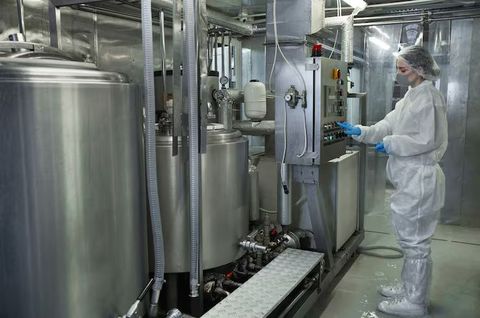
Chemical Dosing Systems: Insights Into Control and Chemical Management
Updated: September 13, 2026
Read More