Bearing Production Equipment Overview of Machinery, Components, and Production Methods
Bearing production equipment includes the machines, tools, and inspection systems used to manufacture bearings for industrial machinery, vehicles, electrical motors, and other mechanical applications.
A bearing production equipment overview of machinery, components, and production methods explains how raw materials are transformed into precision components that help rotating parts move smoothly while supporting loads. Bearings reduce friction between moving surfaces and help maintain alignment during operation.
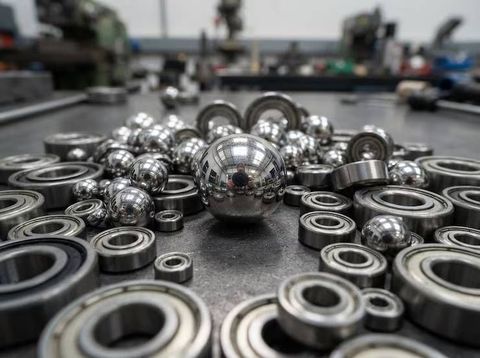
Bearings have been used in mechanical systems for centuries, with modern production methods developing alongside advances in metallurgy, machining, and industrial automation. Today, manufacturers produce several bearing types, including ball bearings, roller bearings, tapered roller bearings, and needle bearings. Each design serves different combinations of rotational speed, load, space, and operating conditions.
Bearing production requires careful control of dimensions, surface finish, hardness, and material quality. Even small variations can affect vibration, noise, heat generation, and operating life. For this reason, production lines combine metalworking equipment with heat treatment, finishing processes, assembly machinery, and quality inspection systems.
Main Components of a Bearing
The design of a bearing depends on its intended application, but many common types contain several essential components.
Inner ring: Fits around the rotating shaft and provides a raceway for the rolling elements.
Outer ring: Supports the outer raceway and fits into a housing or surrounding structure.
Rolling elements: Balls or rollers carry loads while moving between the raceways.
Cage or retainer: Maintains spacing between rolling elements and helps guide their movement.
Seals or shields: Limit the entry of contaminants and help retain lubricant in applicable designs.
Lubricant: Reduces friction and wear between contacting surfaces during operation.
Not every bearing contains all these components. Plain bearings, for example, use sliding contact rather than balls or rollers, while specialized bearing designs may include additional features for particular operating conditions.
Machinery Used in Bearing Production
Bearing production equipment is selected according to the bearing design, material, required precision, and production volume. Different machines perform individual operations, with automated production lines coordinating multiple stages.
Common equipment includes:
Forging presses: Shape heated or prepared metal into preliminary ring or component forms.
CNC lathes: Machine bearing rings to specified dimensions.
Grinding machines: Refine raceways and surfaces to achieve accurate dimensions and smooth finishes.
Heat treatment furnaces: Change material properties through controlled heating and cooling.
Ball and roller manufacturing machines: Form and finish rolling elements.
Superfinishing equipment: Further improves selected surfaces by reducing microscopic irregularities.
Assembly machines: Position rings, rolling elements, cages, and other components.
Inspection equipment: Measures dimensions, surface quality, hardness, and other characteristics.
The production sequence differs according to bearing type. A large industrial roller bearing may require different forming and handling equipment from a small bearing used in an electric motor.
Importance
Bearing production equipment plays an important role in manufacturing because bearings influence the movement, alignment, and reliability of many mechanical systems. They are used in electric motors, agricultural machinery, industrial conveyors, railway equipment, wind turbines, household appliances, and automotive assemblies. Consistent manufacturing helps these systems operate within their intended mechanical limits.
Production accuracy matters because bearings experience repeated contact forces during operation. Incorrect dimensions, unsuitable hardness, surface defects, or contamination can contribute to vibration, excessive heat, noise, and premature wear. These issues may interrupt manufacturing activities or require components to be inspected and replaced.
Material Selection and Preparation
Bearing rings and rolling elements are commonly produced from specially selected steels with properties suited to their intended loads and operating environments. Some applications use stainless steels, ceramics, or other materials when corrosion resistance, electrical insulation, reduced mass, or specific performance characteristics are important.
Before machining begins, raw material is inspected for composition, dimensions, and visible defects where appropriate. Forging or other forming processes create an initial shape, while subsequent machining prepares the components for heat treatment and finishing.
Production Methods and Process Control
Bearing manufacturing generally involves several connected stages. Although the precise sequence varies, a typical process follows the steps below.
Material preparation: Metal stock is selected, inspected, and prepared for forming.
Forming and machining: Components are shaped and machined close to their required dimensions.
Heat treatment: Controlled thermal processing develops the required hardness and material structure.
Grinding and finishing: Raceways and other functional surfaces are refined to meet dimensional and surface requirements.
Cleaning and assembly: Components are cleaned, inspected, and assembled in a controlled environment.
Final testing: Finished bearings undergo checks appropriate to their design and intended use.
Process control helps maintain consistency between production batches. Manufacturers may monitor machine settings, tool wear, temperature, vibration, and dimensional measurements to identify changes before they affect a large number of components.
Quality Measurements in Bearing Manufacturing
| Measurement | What it evaluates | Why it matters |
|---|---|---|
| Dimensional accuracy | Ring, bore, and outer diameter measurements | Supports correct fit and alignment |
| Surface finish | Smoothness of raceways and contact surfaces | Influences friction and wear |
| Hardness | Resistance to indentation and deformation | Helps assess material condition |
| Runout | Deviation during rotation | Relates to alignment and rotational accuracy |
| Vibration and noise | Dynamic behavior during operation | Helps identify certain manufacturing defects |
| Cleanliness | Presence of particles and residue | Reduces contamination-related risks |
Individual measurements do not establish every aspect of bearing quality. Testing requirements depend on bearing type, manufacturing specifications, application, and relevant technical standards.
Recent Updates
Developments in bearing production during 2024–2026 have continued to emphasize automation, digital quality monitoring, energy management, and precision machining. The extent of adoption varies according to factory size, production requirements, equipment age, and investment priorities.
Automation and Digital Manufacturing
Automated production lines increasingly use robotic handling, computer numerical control (CNC) machines, and integrated inspection systems. These technologies can reduce repetitive manual handling and help maintain consistent process settings. Human oversight remains important for interpreting results, handling unusual conditions, and verifying that equipment operates within specified limits.
Digital manufacturing systems can collect data from machines, sensors, and inspection equipment. By examining trends in temperature, vibration, tool condition, and dimensional measurements, production teams can identify process changes and plan maintenance activities. Data quality and correct interpretation remain essential for reliable decisions.
Precision Grinding and Advanced Inspection
Grinding and superfinishing continue to be important because bearing raceways require controlled geometry and surface characteristics. Improvements in machine controls, measurement systems, and process monitoring help manufacturers evaluate these characteristics more consistently.
Automated optical inspection and coordinate measuring machines can assess selected dimensions and surface features. Other methods, such as vibration testing and material analysis, provide information about different aspects of component condition. The appropriate inspection method depends on the defect being investigated and the relevant production specification.
Energy and Resource Management
Manufacturers are also examining electricity consumption, heat treatment efficiency, coolant use, and material waste. Optimizing furnace operation and machining processes can reduce unnecessary resource use, although actual results depend on the equipment and production conditions.
Digital monitoring can help identify energy-intensive stages and track changes in equipment performance. Such measures form part of wider efforts to improve manufacturing efficiency while maintaining the required precision and material properties.
Tools and Resources
Several technical tools and reference materials help explain bearing production equipment and its operating requirements.
Design and Manufacturing Tools
Computer-aided design (CAD) software supports the creation and review of bearing geometry. Computer-aided manufacturing (CAM) software helps prepare machining instructions, while CNC control systems manage machine movements according to programmed parameters.
Metrology tools, including micrometers, bore gauges, surface roughness testers, hardness testers, and coordinate measuring machines, are used to evaluate manufactured components. Their accuracy depends on calibration, correct use, environmental conditions, and measurement procedures.
Technical Standards and Reference Websites
Useful resources include:
International Organization for Standardization (ISO): Publishes standards related to rolling bearings, dimensions, tolerances, and testing.
American Society for Testing and Materials (ASTM International): Provides material and testing standards relevant to metals and manufacturing.
Bearing manufacturers' technical catalogs: Explain bearing types, component arrangements, tolerances, materials, and application requirements.
Engineering handbooks: Describe machining, heat treatment, grinding, lubrication, and inspection principles.
Manufacturing analysis software: Supports production monitoring, dimensional analysis, and equipment performance reviews.
Technical references should be matched to the bearing type and applicable specification because dimensions, tolerances, and testing procedures can differ across designs.
FAQs
What equipment is used in bearing production?
Bearing production equipment commonly includes forging presses, CNC lathes, heat treatment furnaces, grinding machines, finishing systems, assembly equipment, and inspection instruments. The specific equipment depends on the bearing design and production requirements.
How are ball bearings manufactured?
Ball bearings are generally produced by forming and machining the rings, heat-treating the relevant components, grinding and finishing the raceways, and manufacturing the balls to specified dimensions. The components are then cleaned, assembled, lubricated where required, and inspected.
Why is precision grinding important in bearing production?
Precision grinding helps achieve the required raceway geometry, dimensions, and surface finish. These characteristics influence contact conditions, rotational accuracy, friction, and bearing performance.
What materials are used to manufacture bearings?
Specialized bearing steels are widely used because they can provide suitable hardness and resistance to repeated contact loads. Stainless steel, ceramic materials, and other alloys are used in certain applications based on operating conditions.
How does automation affect bearing manufacturing?
Automation can coordinate machining, material handling, measurement, and assembly. It supports repeatable production processes, while inspection systems and trained personnel remain necessary to verify component quality.
Conclusion
Bearing production equipment combines forming, machining, heat treatment, finishing, assembly, and inspection technologies to manufacture precision mechanical components. Material selection, dimensional accuracy, surface quality, and process control all influence the characteristics of finished bearings. Automation and digital monitoring continue to shape manufacturing methods, while energy management and inspection remain important considerations. Understanding these processes provides a foundation for learning how bearings are produced for different industrial applications.

Related Post...
Industrial Tanks Overview of Storage Systems, Construction Materials, and Applications
Updated: October 20, 2026
Read More
Oilfield Chemicals Basics: Understanding Chemical Roles in Oil and Gas Operations
Updated: October 19, 2026
Read More
Microcontrollers Manufacturing Overview: Learn About Production Processes
Updated: October 26, 2026
Read More