Industrial Chillers Overview: Key Components, Types, and Cooling Functions
Industrial chillers are mechanical cooling systems designed to remove heat from water or another circulating fluid.
The cooled fluid can then be moved through equipment, production processes, storage areas, or building systems where controlled temperatures are required. Industrial Chillers Overview helps explain how these systems work, what major components they contain, and how different designs meet different cooling requirements.
The basic idea behind a chiller is heat transfer. A refrigeration circuit absorbs heat from a process fluid through an evaporator, moves that heat through a refrigerant, and then releases it through a condenser. A compressor drives the refrigerant through this cycle, while expansion equipment controls its pressure before the refrigerant returns to the evaporator.
Chillers developed from refrigeration technology used for controlled-temperature environments and industrial processes. As manufacturing became more dependent on consistent temperatures, dedicated cooling equipment became important for processes involving plastics, chemicals, food production, pharmaceuticals, electronics, metalworking, and other temperature-sensitive applications.
How an Industrial Chiller Works
A typical system follows a repeating refrigeration cycle:
- The evaporator transfers heat from the process fluid into the refrigerant.
- The compressor raises the refrigerant pressure and temperature.
- The condenser releases the absorbed heat to air or water.
- The expansion device lowers refrigerant pressure before the cycle begins again.
The result is a continuous cooling process. Depending on the design, the chilled fluid may circulate directly through production equipment or through a secondary heat exchanger.
Main Components
The major components work together rather than operating independently. A change in one part can affect the performance of the overall cooling system.
| Component | Main function |
|---|---|
| Compressor | Moves and compresses refrigerant |
| Evaporator | Absorbs heat from the circulating fluid |
| Condenser | Transfers heat away from the refrigerant |
| Expansion device | Regulates refrigerant pressure and flow |
| Pumps | Circulate chilled or condenser fluid |
| Controls | Monitor temperatures, pressures, and operating conditions |
| Heat exchangers | Transfer heat between separate fluids |
Importance
Industrial cooling matters because many production processes generate heat continuously. If temperatures move outside a required range, equipment operation, material properties, product consistency, or process stability can be affected.
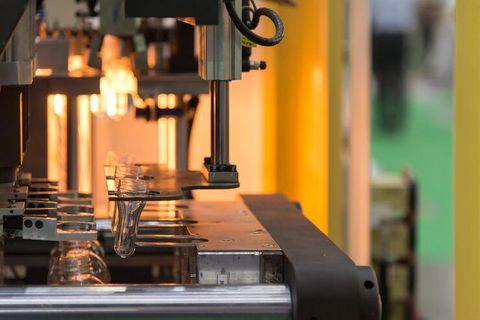
For example, plastic processing equipment may require controlled cooling for molds and hydraulic systems. Food and beverage operations may use chilled fluids for processing or temperature control, while electronics manufacturing can require stable thermal conditions around sensitive equipment.
Where Chillers Are Used
Industrial chillers can appear in a wide range of environments, including:
- Plastic injection and extrusion processes
- Chemical and laboratory processes
- Food and beverage production
- Electronics and semiconductor manufacturing
- Metalworking equipment
- Data and equipment cooling
- Storage and temperature-controlled facilities
- Large commercial and institutional cooling systems
The required cooling temperature can vary significantly between applications. A system intended for ordinary process cooling may have very different operating requirements from equipment used for low-temperature industrial processes.
Air-Cooled and Water-Cooled Designs
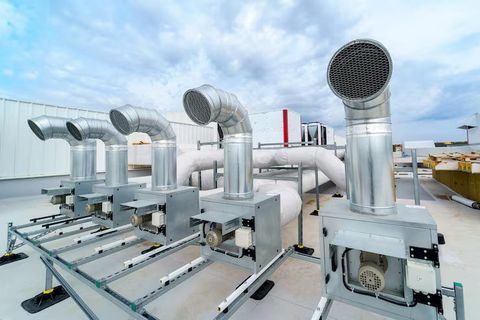
One important distinction is how the condenser rejects heat. Air-cooled chillers transfer heat directly to surrounding air, while water-cooled chillers transfer heat into a separate water circuit, commonly connected with cooling towers or other heat-rejection equipment.
Air-cooled systems can have a relatively straightforward installation arrangement because they do not require a cooling tower circuit. Water-cooled systems can be suitable for applications where larger cooling capacities and controlled heat rejection are required.
Recent Updates
Industrial Chillers Overview has become increasingly connected with energy efficiency, refrigerant selection, digital monitoring, and system-level control. Recent developments have focused not only on the chiller itself but also on how compressors, pumps, controls, heat rejection equipment, and cooling loads interact.
The U.S. Department of Energy updated its federal purchasing guidance for electric chillers in 2024. The guidance considers both full-load and part-load efficiency, reflecting the fact that many cooling systems operate under changing loads rather than continuously at maximum capacity.
Refrigerant transition is another important development. U.S. Environmental Protection Agency rules establish lower global warming potential limits for several categories of chillers, with different compliance periods depending on the application and temperature range. For example, certain comfort-cooling chillers have a 700 GWP limit for manufacture and import beginning in 2025, while particular industrial process refrigeration applications have later compliance periods.
This transition has increased attention on refrigerants such as HFO-based options and lower-GWP blends. The EPA identifies several alternatives for different chiller technologies, but refrigerant selection depends on equipment design, application requirements, safety considerations, and applicable regulations.
Efficiency and Variable Operation
Variable-speed compressors, pumps, and cooling tower fans are also receiving greater attention. These technologies can adjust equipment operation as cooling demand changes rather than maintaining the same operating level at all times.
The U.S. Department of Energy identifies variable-speed drives, variable-flow chilled-water systems, temperature setpoint adjustments, and system-level controls among measures used to improve process-cooling performance.
Digital monitoring is another developing area. Modern chillers may incorporate sensors and network connectivity that allow operating conditions such as temperature, pressure, flow, and equipment status to be monitored through control systems. Connected equipment also introduces cybersecurity considerations that need to be considered alongside cooling performance.
Tools and Resources
Several resources can help readers understand Industrial Chillers Overview and evaluate technical information.
Efficiency References
The U.S. Department of Energy's Federal Energy Management Program provides chiller efficiency guidance covering air-cooled and water-cooled electric chillers. Its information distinguishes full-load performance from integrated part-load performance, which can be useful when comparing technical specifications.
Refrigerant Information
The U.S. EPA provides refrigerant transition information and tables covering GWP limits, compliance periods, and acceptable alternatives for different refrigeration applications. These resources can help explain why refrigerant selection is changing across the cooling industry.
Cooling Calculations
Basic cooling-load calculators can help estimate the amount of heat that must be removed from a process. Common inputs include fluid flow rate, entering temperature, leaving temperature, fluid properties, and operating conditions. More detailed engineering calculations may also consider ambient conditions, heat gains, pressure drops, and system losses.
Monitoring and Control Platforms
Industrial control platforms can collect readings from temperature sensors, pressure sensors, flow meters, compressors, pumps, and other equipment. Historical data can help operators understand load patterns and identify unusual operating conditions.
FAQs
What is an Industrial Chillers Overview?
Industrial Chillers Overview describes the purpose, components, operating principles, and common types of chillers used for controlled cooling. It provides general background on how refrigeration systems remove heat from circulating fluids.
What are the main components of an industrial chiller?
The main components include a compressor, evaporator, condenser, expansion device, pumps, sensors, and control equipment. Together, these components move refrigerant through a refrigeration cycle while transferring heat away from the process fluid.
What types of industrial chillers are commonly used?
Common types include air-cooled, water-cooled, screw, scroll, reciprocating, and centrifugal chillers. The appropriate design depends on factors such as cooling capacity, temperature requirements, operating conditions, and system configuration.
Why are low-GWP refrigerants becoming more important?
Lower-GWP refrigerants are receiving greater attention because regulations in several markets are restricting higher-GWP refrigerants in particular applications. Requirements differ according to equipment type, application, refrigerant, and jurisdiction.
How does variable-speed technology affect chiller operation?
Variable-speed technology allows compressors, pumps, or fans to adjust their operating speed according to cooling demand. This can help systems respond to changing loads and may improve part-load efficiency when the equipment and controls are appropriately designed.
Conclusion
Industrial chillers use refrigeration cycles to remove heat from circulating fluids and support controlled-temperature processes. Their main components include compressors, evaporators, condensers, expansion devices, pumps, and control systems. Current developments are emphasizing lower-GWP refrigerants, variable-speed operation, energy efficiency, and connected monitoring. Understanding these elements provides a practical foundation for interpreting different chiller designs and their cooling functions.

Related Post...

Drilling Equipment Explanation: Learn How Different Tools and Systems Work
Updated: September 11, 2026
Read More
Oil Filtering Machines: Explore Important Information About Oil Filtration
Updated: September 13, 2026
Read More
Motor Testing Machines: Explanation of Types, Uses, and Testing Methods
Updated: September 21, 2026
Read More