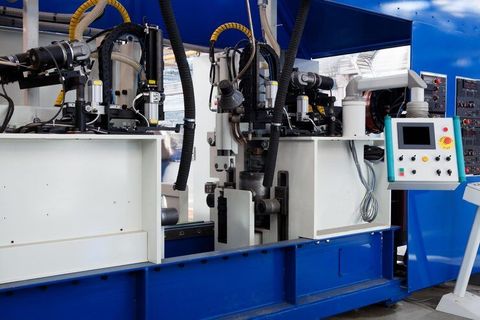
Injection Moulding Machines: Explore Modern Manufacturing Processes and Applications
Injection moulding machines are industrial systems used to shape plastic and other mouldable materials into repeatable parts.
The process involves heating a material until it can flow, pushing it into a mould cavity, allowing it to cool or cure, and then removing the finished part. The mould determines the shape, while the machine controls pressure, movement, temperature, and timing.
The process developed from early plastic-forming methods in the late nineteenth and early twentieth centuries as plastics entered packaging, transport, electronics, household products, and industrial equipment. Modern machines combine mechanical systems with electronic controls, sensors, software, and automation.
How the process works
A typical cycle begins when plastic pellets enter a heated barrel. A rotating screw moves and melts the material, then pushes a measured amount into the closed mould. After the cavity fills, pressure is maintained while the material cools and becomes stable enough to eject.
The main stages include:
- Material preparation: Pellets may be dried, blended, or conditioned according to the material.
- Plasticising: Heat and screw movement turn the feed material into a consistent melt.
- Injection: The melt is pushed into the mould cavity.
- Holding and cooling: Pressure is controlled while the part takes its final shape.
- Ejection: Pins or other mechanisms release the part.
- Inspection: Dimensions, appearance, weight, and other characteristics can be checked.
Machines vary according to clamping force, injection capacity, mould size, material type, and production requirements. Hydraulic, electric, and hybrid designs are all used.
Importance
Why injection moulding machines matter
Injection moulding machines can produce large quantities of consistent parts with complex shapes. The process can be adapted for precision components, structural parts, thin packaging, medical-device components, electrical housings, automotive components, and household items.
For general users, the technology is often visible through products rather than machinery. Bottle caps, storage containers, toys, connectors, fittings, and many vehicle interior components can be produced through related moulding processes.
Materials and applications
Thermoplastics such as polypropylene, polyethylene, ABS, polycarbonate, and nylon are commonly associated with injection moulding. Certain machines and moulds can also process recycled polymers, engineering plastics, elastomeric materials, and other formulations.
Material choice affects heating, shrinkage, strength, surface appearance, drying, and mould design. Product designers therefore consider both the intended function of a part and how the material will behave during processing.
| Machine or process feature | Main purpose | Common application area |
|---|---|---|
| Hydraulic drive | Controlled movement and clamping | Large and general-purpose parts |
| Electric drive | Precise electrically driven motion | Precision and repeatability |
| Hybrid drive | Combines hydraulic and electric functions | Mixed production requirements |
| Injection compression | Forms thin or lightweight parts | Packaging and thin-wall components |
| Multi-cavity mould | Produces several parts per cycle | High-volume component production |
| Robotic handling | Moves parts or related items | Automated production cells |
Common manufacturing challenges
Injection moulding requires careful control because small process changes can affect the final part. Moisture, inconsistent feedstock, incorrect temperatures, mould wear, pressure changes, and cooling differences can contribute to defects.
Common issues include warping, sink marks, short shots, flash, weld lines, burn marks, and dimensional variation. Monitoring systems can help identify unusual process changes.
Recent Updates
More electric and energy-aware machinery
From 2024 through 2026, manufacturers have continued developing electric and hybrid injection moulding machines with greater attention to energy use, process control, compact layouts, and automation. At NPE 2024, ARBURG demonstrated recycled ABS processing and electric injection compression moulding for thin-walled packaging.
Recycled materials and process stability
Using recycled polymers can introduce variation in material properties. In 2025, ARBURG described digital control functions designed to compensate for changes in recyclate behaviour during injection and holding phases. This reflects a wider focus on maintaining stable mould filling when recycled or variable feedstocks are used.
Artificial intelligence and connected controls
Digitalisation has also moved toward artificial intelligence. At K 2025, ENGEL presented AI-based process monitoring that can analyse many process parameters and identify deviations in real time. In 2026, the company demonstrated an autonomous injection moulding cell that adapts process settings based on defined quality requirements. These developments indicate movement from data display toward systems that assist with process adjustment and troubleshooting.
Automation and thin-wall production
Automation increasingly connects injection moulding machines with robots, inspection systems, conveyors, mould sensors, and material-handling equipment. Thin-wall packaging is another active area, with manufacturers demonstrating electric and injection-compression approaches for lightweight parts and recycled-content materials.
Tools and Resources
Design and mould-flow tools
Computer-aided design software can help users create part geometry and mould concepts before physical production. Tools such as Autodesk Moldflow and SOLIDWORKS Plastics can be used to study filling behaviour, cooling, pressure, shrinkage, and potential design problems.
Material databases such as MatWeb can help users review general information about polymer grades, including mechanical and thermal properties. Manufacturer technical manuals and machine-control documentation can also help explain operating ranges, safety functions, and process settings.
Planning and process references
Useful resources include:
- Mould-flow simulation tools for filling, cooling, and warpage studies.
- Polymer material databases for comparing general characteristics.
- Machine manuals for controls, limits, and operating procedures.
- Mould-design references for gates, runners, cooling channels, and ejection.
- Quality checklists for dimensions, appearance, weight, and process conditions.
- Energy-monitoring tools for reviewing electricity use across production cycles.
These resources connect design, materials, moulds, machine settings, and quality inspection.
FAQs
What are injection moulding machines used for?
Injection moulding machines are used to form repeatable plastic parts and other mouldable products. Applications include packaging, automotive components, electronics housings, appliances, consumer products, fittings, and industrial components.
How do injection moulding machines work?
Injection moulding machines heat and prepare a material, inject it into a closed mould, apply holding pressure, allow the part to cool or cure, and then eject the finished component. Sensors and control systems help regulate the process.
What types of injection moulding machines are available?
Common categories include hydraulic, electric, and hybrid machines. They can also be classified by clamping force, injection capacity, mould configuration, automation level, and the materials they process.
Can injection moulding machines process recycled plastic?
Yes. Many modern injection moulding machines can process recycled polymers when the material is properly prepared and the machine and mould suit its characteristics. Recycled materials can vary in moisture, viscosity, and composition, so process control can be important.
What recent changes are affecting injection moulding machines?
Recent developments include greater use of electric drives, recycled materials, connected sensors, automation, digital process monitoring, and artificial intelligence. Demonstrations during 2024–2026 show continued development toward more automated and data-driven production systems.
Conclusion
Injection moulding machines combine heating, injection, clamping, cooling, and control systems to produce repeatable components in many industries. Their applications range from everyday plastic products to precision parts used in transport, electronics, packaging, and industrial equipment. Developments during 2024–2026 have placed increased attention on electric machinery, recycled materials, automation, sensors, and artificial intelligence. Understanding the basic process and the role of materials, moulds, and process controls provides a foundation for understanding modern plastic manufacturing.

Related Post...
Blow Molding Machine Overview: Understanding Modern Plastic Manufacturing
Updated: September 16, 2026
Read More
Commercial HVAC System Information: Understand Planning, Installation, and Performance
Updated: September 13, 2026
Read More
Motor Testing Machines: Explanation of Types, Uses, and Testing Methods
Updated: September 11, 2026
Read More