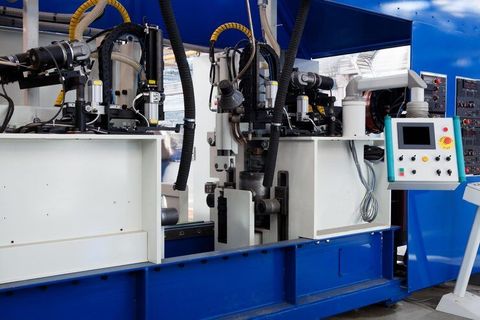
Blow Molding Machine Overview: Understanding Modern Plastic Manufacturing
A blow molding machine is industrial equipment used to make hollow plastic products by shaping heated plastic inside a mold with air pressure.
Common examples include bottles, containers, drums, tanks, and selected automotive or household components. The process is widely used because it can create hollow shapes with relatively consistent walls and repeatable dimensions.
The basic idea is similar to inflating a balloon inside a container-shaped mold. Plastic is first heated until it becomes workable, placed or formed inside a mold, and then expanded against the mold walls using compressed air. After cooling, the mold opens and the finished plastic part is removed.
How Blow Molding Developed
Blow molding developed from early methods for producing hollow plastic objects and became increasingly important as thermoplastics replaced glass and other materials in many applications. Improvements in polymer processing, mold design, temperature control, and automation gradually allowed manufacturers to produce more complex shapes with greater consistency.
Modern systems can combine heating, plastic preparation, molding, cooling, trimming, inspection, and material handling into coordinated production lines. Different machine designs are used depending on the plastic material, container size, shape, wall requirements, and production method.
Main Types of Blow Molding
There are three widely recognized approaches:
- Extrusion blow molding: A heated plastic tube, known as a parison, is formed and enclosed in a mold before air expands it against the mold surface.
- Injection blow molding: Plastic is first injection molded into a preform, which is subsequently expanded inside a mold.
- Injection stretch blow molding: A preform is reheated, stretched in length, and expanded with air. This method is widely associated with PET containers.
Each approach has different process characteristics. Extrusion blow molding is commonly associated with larger hollow parts and containers, while injection and injection stretch processes are frequently used for bottles and containers requiring controlled dimensions.
Importance
Why Blow Molding Matters
A blow molding machine plays an important role in modern plastic manufacturing because hollow plastic products are part of many everyday environments. Bottles, household containers, industrial drums, personal-care packaging, and some vehicle components can be produced through blow molding processes.
The method also allows manufacturers to control important characteristics such as shape, wall distribution, capacity, and material use. For products that need specific strength around handles, bases, openings, or other structural areas, controlled molding can help distribute plastic according to the design.
Materials Used in the Process
Several thermoplastic materials can be processed through blow molding, depending on the machine and product requirements. Common examples include polyethylene (PE), polypropylene (PP), polyethylene terephthalate (PET), polyvinyl chloride (PVC), and selected engineering plastics.
| Material | Common Applications | General Characteristics |
|---|---|---|
| HDPE | Bottles, drums, containers | Tough and chemically resistant |
| PET | Beverage and food containers | Clear, lightweight, and rigid |
| PP | Containers and household products | Good heat resistance |
| PVC | Selected bottles and containers | Useful for specific chemical properties |
| Engineering plastics | Technical components | Used where higher performance is required |
Material selection affects processing temperature, cooling behavior, wall thickness, product strength, and recycling considerations. The same machine configuration may therefore not be appropriate for every polymer or product design.
Challenges Addressed by Modern Equipment
Traditional plastic molding can involve variation in temperature, material flow, wall thickness, cooling, and cycle timing. Modern control systems are designed to monitor these variables more precisely.
Automation can also coordinate material feeding, mold movement, trimming, leak testing, inspection, and data collection. These capabilities can reduce the amount of manual adjustment needed while providing operators with more information about production conditions.
Energy use has also become an important consideration. Recent machine development has included electric drives, improved heating systems, compressed-air management, and process controls intended to use energy more efficiently.
Recent Updates
Greater Use of Electric and Hybrid Systems
Developments reported across the blow molding industry from 2024 through 2026 show continued attention to all-electric and hybrid machine designs. These systems use servo-driven or electronically controlled movements to improve positioning and process control. Industry coverage in 2026 also identified electric systems, recycled-material compatibility, and digital controls as important areas of current development.
The move toward electric systems is not identical across every application. Hydraulic, hybrid, and electric configurations continue to exist because product size, force requirements, production conditions, and plant design differ.
Recycling and Lightweighting
Recycled plastic has become an increasingly important consideration in blow molding. Equipment development has focused on processing recycled materials while maintaining suitable product quality and stable processing conditions. Multi-layer structures can also separate different material layers within a product, depending on the application and machine configuration.
Lightweighting is another significant trend. It involves reducing the amount of plastic used in a product while maintaining the required mechanical performance. Recent industry work has demonstrated how improved container design, material distribution, and parison control can contribute to material reduction.
Automation, Data, and Intelligent Controls
Between 2024 and 2026, manufacturers have increasingly focused on connected controls, sensors, automated inspection, and production monitoring. These systems can collect information about temperatures, cycle times, pressure, material behavior, and equipment conditions.
Artificial intelligence is also appearing in discussions around blow molding controls and inspection. Current applications include analyzing production information, identifying process variations, and supporting troubleshooting. The technology is developing, so its capabilities vary between machines and production environments.
More Efficient Product Development
Another development is the use of digital design and rapid mold-development techniques. Industry discussions have highlighted technologies such as 3D-printed molds and digital simulation as tools that can support prototyping and design evaluation.
These approaches can help engineers examine product geometry and material distribution before committing to a larger production setup. They are particularly relevant when container designs need to balance weight, strength, appearance, and manufacturing requirements.
Tools and Resources
Machine Specifications and Process Guides
Technical machine manuals, polymer processing guides, mold-design references, and manufacturer documentation can help readers understand how a blow molding machine operates. These resources commonly explain mold dimensions, clamping arrangements, heating requirements, material compatibility, cycle controls, and compressed-air systems.
Design and Calculation Tools
Several types of digital tools can support blow molding analysis:
- CAD software: Used to create and examine three-dimensional container and component designs.
- Mold-flow simulation: Helps study how plastic may distribute during molding.
- Energy-monitoring tools: Track electrical and compressed-air consumption during production.
- Production dashboards: Display cycle information, machine conditions, downtime, and quality data.
- Material databases: Provide information about polymer properties and processing characteristics.
These tools are most useful when their results are interpreted alongside actual material specifications and production conditions.
Standards and Technical References
Organizations involved in plastics, packaging, manufacturing, and materials engineering publish standards and technical references relevant to plastic containers and processing. Product specifications, safety requirements, recycling rules, and testing procedures can differ according to the intended application and region.
FAQs
What is a blow molding machine used for?
A blow molding machine is used to produce hollow plastic products such as bottles, containers, drums, tanks, and selected technical components. The specific product depends on the machine type, mold design, polymer, and process conditions.
How does a blow molding machine work?
A blow molding machine heats or prepares plastic, forms it into a suitable shape, places it within a mold, and uses air pressure to expand the plastic against the mold walls. The product is then cooled and removed.
What are the main types of blow molding machines?
The main types are extrusion blow molding, injection blow molding, and injection stretch blow molding. Each method uses a different approach to prepare and expand the plastic.
Which plastics can be used in a blow molding machine?
Common materials include polyethylene, polypropylene, PET, and selected PVC and engineering plastics. Compatibility depends on the machine configuration, processing conditions, and product requirements.
What are current blow molding machine trends?
Current trends include greater use of electric and hybrid drives, recycled-material processing, lightweight product design, automated inspection, connected controls, and data-based process monitoring.
Conclusion
A blow molding machine converts heated thermoplastic material into hollow products through controlled molding and air expansion. Different technologies support different product shapes, materials, sizes, and performance requirements. From 2024 through 2026, developments have increasingly focused on electric drives, recycled materials, lightweighting, automation, and digital process monitoring. Understanding these fundamentals provides useful context for how modern plastic manufacturing continues to evolve.

Related Post...

Motor Testing Machines: Explanation of Types, Uses, and Testing Methods
Updated: September 11, 2026
Read More
Fabric Coating Machine Insights: Important Factors, Techniques, and Functions
Updated: September 11, 2026
Read More
Oil Filtering Machines: Explore Important Information About Oil Filtration
Updated: September 13, 2026
Read More